
Exercise
Physiology
How the body responds and adapts to training.

OUR SCIENCE
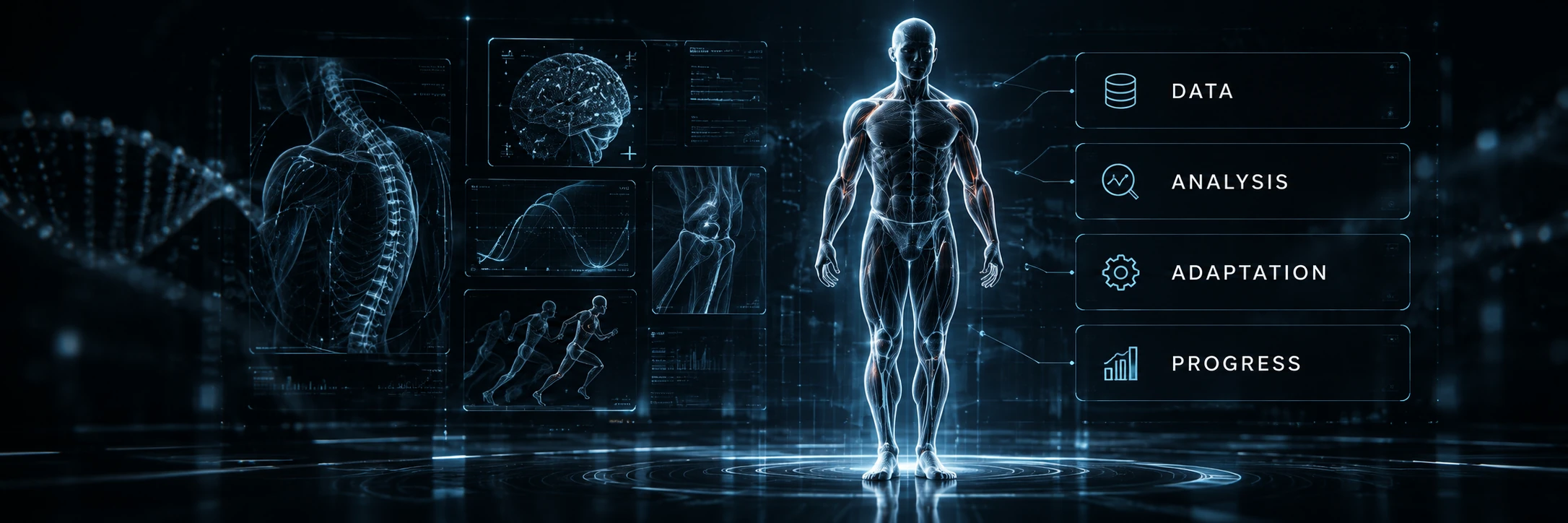
ADAPT brings together advances in exercise physiology, biomechanics, training periodization, and artificial intelligence to develop a more individualized approach to human performance.
Our mission is to transform established scientific knowledge into intelligent, adaptive training experiences.
01 / THE THINKING BEHIND THE FRAMEWORK
Human performance is a complex interaction of physiology, movement, neural coordination and adaptation.
ADAPT draws on established scientific knowledge and emerging research across exercise physiology, biomechanics, periodization, recovery science and performance monitoring. We explore how computational techniques and artificial intelligence may support more responsive, individualized training decisions.
We do not claim one training method has every answer. Instead, we aim to identify what is supported by evidence, apply it with coaching expertise, and revise our framework when better evidence emerges.
Our ambition is to make scientific knowledge actionable.
How the body responds and adapts to training.
Movement efficiency, structure and mechanical demand.
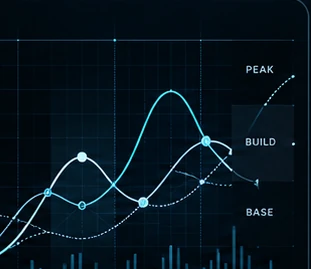
Organizing training over time with purpose.
Muscular function, recruitment and coordination.

Understanding readiness and fatigue.

Turning data into adaptive training decisions.
02 / FROM SCIENCE TO APPLICATION
Science matters most when it can be translated into better action. ADAPT is focused on turning research, measurement and practical coaching knowledge into training experiences that are clearer, more individualized and more responsive over time.
03 / THE FOUNDATIONS
Scientific concepts are not slogans. Each should lead to an observable decision about programming, recovery or performance.
Consider the athlete as an interacting biological system. Select the training stimulus for the response it is meant to support.
STIMULUS → RESPONSEControlled tension and movement conditions are tools among dynamic and isometric methods — chosen for context, never presumed universally superior.
MUSCULAR DEMANDOrganize volume, intensity, specificity and recovery across weeks and seasons instead of repeating maximal sessions indefinitely.
STRUCTURED PROGRESSIONAdjust around the athlete's sport, history, current capacity and actual response. Identical plans need not produce identical outcomes.
PERSON BEFORE TEMPLATEUnderstand fatigue using multiple indicators — including performance, sleep, perceived effort and context — rather than relying on one score.
MULTI-SIGNAL VIEWAssess, adjust, repeat. Evidence is strengthened by honest observation and by respecting the limits of each measurement.
SCIENCE INTO ACTION04 / PERIODIZATION
Development, tonic and recovery describe training intent. They are practical coaching categories, not universal physiological thresholds.
Build capacity through targeted, progressive stimulus while monitoring total stress.
BUILD / CHALLENGE / ADAPTMaintain selected qualities with a more manageable training demand between demanding periods.
MAINTAIN / REFINE / PREPAREReduce workload and prioritize restoration, movement quality and preparation for what comes next.
RESTORE / REASSESS / RETURN03 / INTERACTIVE TRAINING DESIGN LAB
Explore how training intensity, workload, recovery and performance objectives interact. Adjust the variables and see how they change an illustrative training structure.
Launch Training Design Lab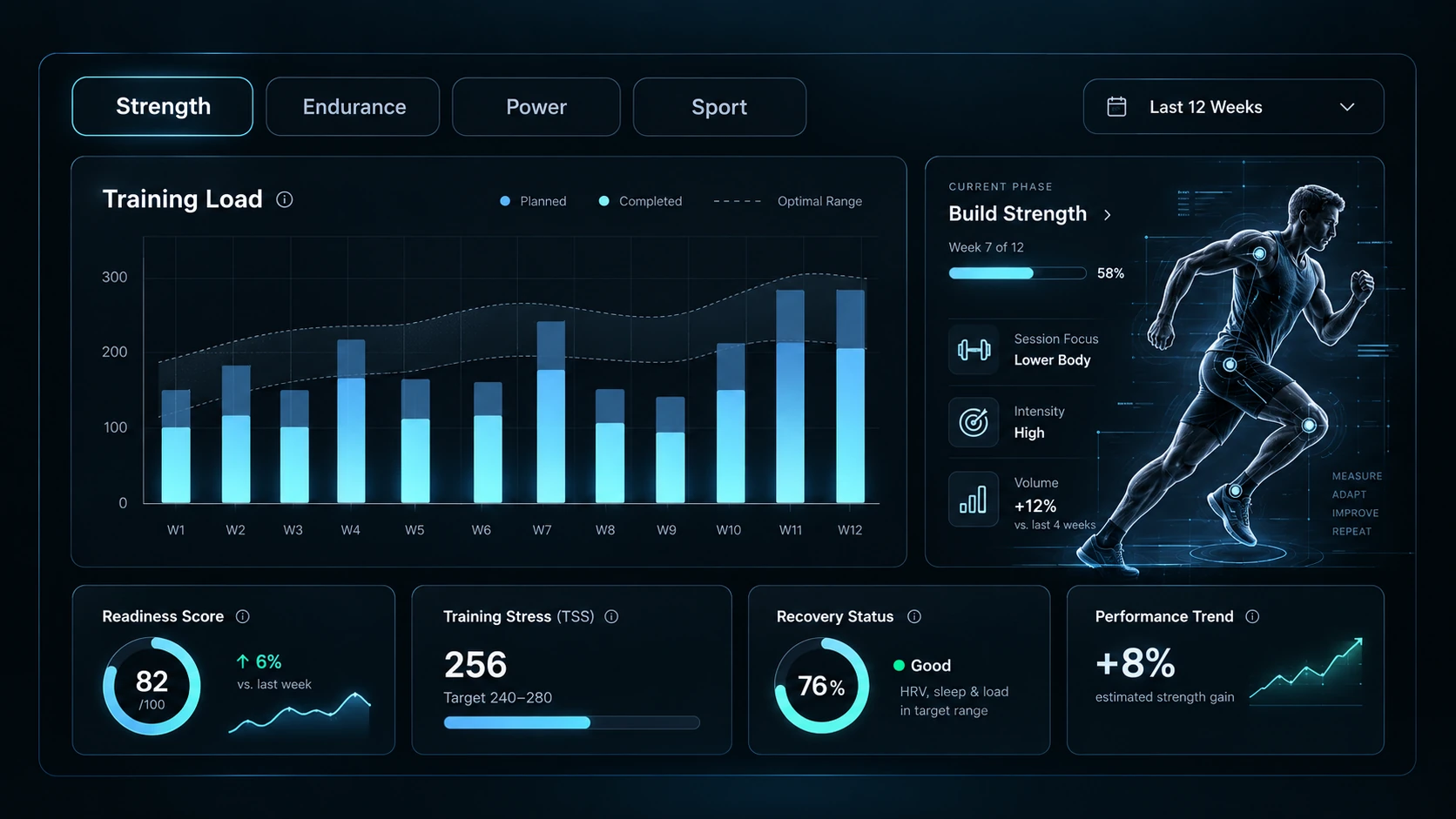
05 / INTERACTIVE TRAINING DESIGN LAB
Explore how different training priorities change a hypothetical week. Move the controls — the calculations, graph and microcycle respond together.
All inputs are conceptual planning variables, not %1RM, laboratory test results or recommended training doses.
PLANNING LENS / ILLUSTRATIVE
Each change informs a different planning balance.
Adjust inputs to explore a conceptual training response.
06 / FROM THEORY TO PRACTICE
“What should I train today?”
“What does this athlete need right now — and what evidence supports that decision?”
Technology does not replace coaching. It makes relevant information visible, helps structure decisions and keeps the athlete at the center.
04 / WHY IT MATTERS
Most training systems still rely on broad averages or fixed templates. ADAPT explores a more integrated model in which science, individual context and intelligent tools work together to support meaningful human progress.
07 / EVIDENCE LIBRARY
Research evolves. We distinguish between established findings, nuanced evidence and concepts still requiring evaluation.
Research lineage, athlete assessment and training methodology at Prosportlab.
PROSPORTLAB / PRIMARY REFERENCESYSTEMATIC REVIEW & META-ANALYSIS · 2022When volume was equated, periodization favored 1RM strength; hypertrophy differences were not established.
MOESGAARD ET AL. / SPORTS MEDICINESYSTEMATIC REVIEW & META-ANALYSIS · 2025Strength adaptations depend on contraction type and what outcome is measured.
JOURNAL OF SCIENCE & MEDICINE IN SPORTSYSTEMATIC REVIEW & META-ANALYSIS · 2022Different loading schemes can affect maximal strength and hypertrophy in different ways.
APPLIED PHYSIOLOGY, NUTRITION & METABOLISMADAPT is developing its own framework. These studies support discussion of relevant principles; they do not validate an ADAPT algorithm or establish superiority of a proprietary method. Academic reference does not imply institutional endorsement.
SCIENCE × EXPERIENCE × INDIVIDUALITY
A more considered approach to performance starts with better questions, useful measurements and experienced coaching.